
2024 Innovation grants success stories
Adaptive Wilderness Within Reach
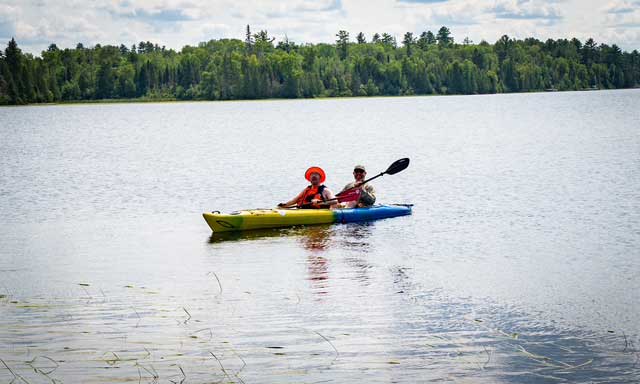
This past July, a multigenerational family experienced the Boundary Waters Canoe Area together. One family member had been searching for a way to share his love of the BWCA with his brother, who became a wheelchair user nearly 10 years ago. During their stay just outside the BWCA, the family enjoyed a guided adaptive pontoon fishing excursion and used adaptive kayaking and canoeing equipment to explore the water together. They shared this reflection after their visit:
“[Our guide,] Dave Hicks was wonderful. We loved our trip around the lake with him (and Opal, Dave’s husky) … I can tell this stay encouraged a new perspective for what trips and vacations can look like for my family. Thank you again for creating a space that is a bridge to feeling emboldened instead of limited. That went for more than just my brother. We had three middle schoolers with us as well, and watching them learn to canoe, lie on the dock watching the stars, try to imitate loon calls and generally embrace the wonder of the outdoors was a delight as well. I think we watched them fall in love with this part of our state and these kinds of ‘adventures.’ They’re already talking about next time.”
This experience captures exactly what Adaptive Wilderness is all about – inclusive adventures that empower families and friends to rediscover what’s possible together, while finding peace and calm in the beauty of the Boundary Waters.
– Jill and Sean Leary
Dakota County Social Services
As part of Dakota County’s Assistive Technology in Employment Innovation grant, a core planning group of provider agencies was established. One of the providers, Great Work, took a large step in expanding the use of assistive technology to help the people we serve succeed in employment. One of the key drivers of this progress has been the addition of an assistive technology specialist for the Great Work team. Chelsie Gibbs, owner, shared the following information:
We selected someone for this role who had already been with our organization for nearly two years. As a high achiever with a strong track record of supporting the people she served, she was eager for a new professional development opportunity (and a small pay bump). The role has provided her with a new avenue for growth while allowing our whole team to benefit from her expertise.
Since stepping into the position, she has conducted nearly 20 internal consultations with employment specialists, providing guidance on available assistive technology, supporting research into new tools and advising on processes for accessing and obtaining technology for the people we serve. Because employment specialists spend most of their time directly supporting people, it can be difficult to stay current on the latest devices, resources and funding options. Having a dedicated specialist has made it easier for them to quickly access accurate information and collaborate on solutions.
She also invests in ongoing learning by attending assistive technology trainings and sharing what she learns back with our team. Each week, she prepares an “Assistive Technology Tool of the Week” email, showcasing one unique solution, whether low-tech or high-tech, that keeps assistive technology at the forefront of the team’s minds and provides a visual reference for what’s possible.
In collaborating with Dakota County on their AT initiative, we’ve also discovered that one of the largest barriers to assistive technology has simply been misinformation. For example, many professionals, including our own team members and case managers, believed that a comprehensive assessment was always required before a person could access any assistive technology. With support from Dakota County, this misunderstanding has been dismantled. As a result, it has become much easier to obtain the right tools for people, helping them reach their employment goals and succeed in their work.
This project has been a big win for our team and, most important, for the people we serve. By reducing unnecessary barriers, investing in professional development and making assistive technology more accessible, we are promoting employment success and ensuring that people have the tools they need to thrive in the workplace.
A few of the items that are being used are: Hypershell Exoskeleton, easy digital lock, watch with alarm features, handheld counter clicker, BoundaryCare seizure monitor, reading pen and watch, cleaning tool belt, Echo Show, laptop holder, door stop, reacher/grabber and many more.
– Dakota County program staff
Epilepsy Foundation of Minnesota
A parent reached out to EFMN to request help securing interpreter services for an upcoming neuropsychological evaluation for their child with epilepsy. A neuropsychological evaluation is a comprehensive assessment that measures cognitive, emotional and behavioral functioning to understand how the brain is working. The evaluation assesses memory, attention, language and problem-solving, and can aid in diagnosing learning disabilities. A neuropsychological evaluation is a critical step in the diagnosis process for children with epilepsy because it can help identify epilepsy and seizure-related learning impacts, guide treatment decisions and inform the development of an IEP and/or 504 Education plan.
EFMN supported the parent in advocating for an interpreter and helped navigate scheduling obstacles within the clinic’s system, which made accessing an interpreter challenging. EFMN's community health worker attended the evaluation appointment with the parent and provided clarification when the interpreter, who was unfamiliar with some medical terminology related to epilepsy, had difficulty conveying the parent’s questions. This allowed the provider to better understand the child’s specific needs, ensured a more accurate evaluation of the child and will ultimately help set up more effective strategies for support.
Medical interpretation is complicated and can be particularly difficult when talking about specialized conditions such as epilepsy, where there are numerous phrases in multiple languages to describe seizure types and comprehension can be affected by even the slightest misinterpretation. When present at provider appointments, EFMN’s community health workers can ensure concerns and treatments are fully understood by both the physician and patient.
– Jill Dent, grants manager
Kaposia
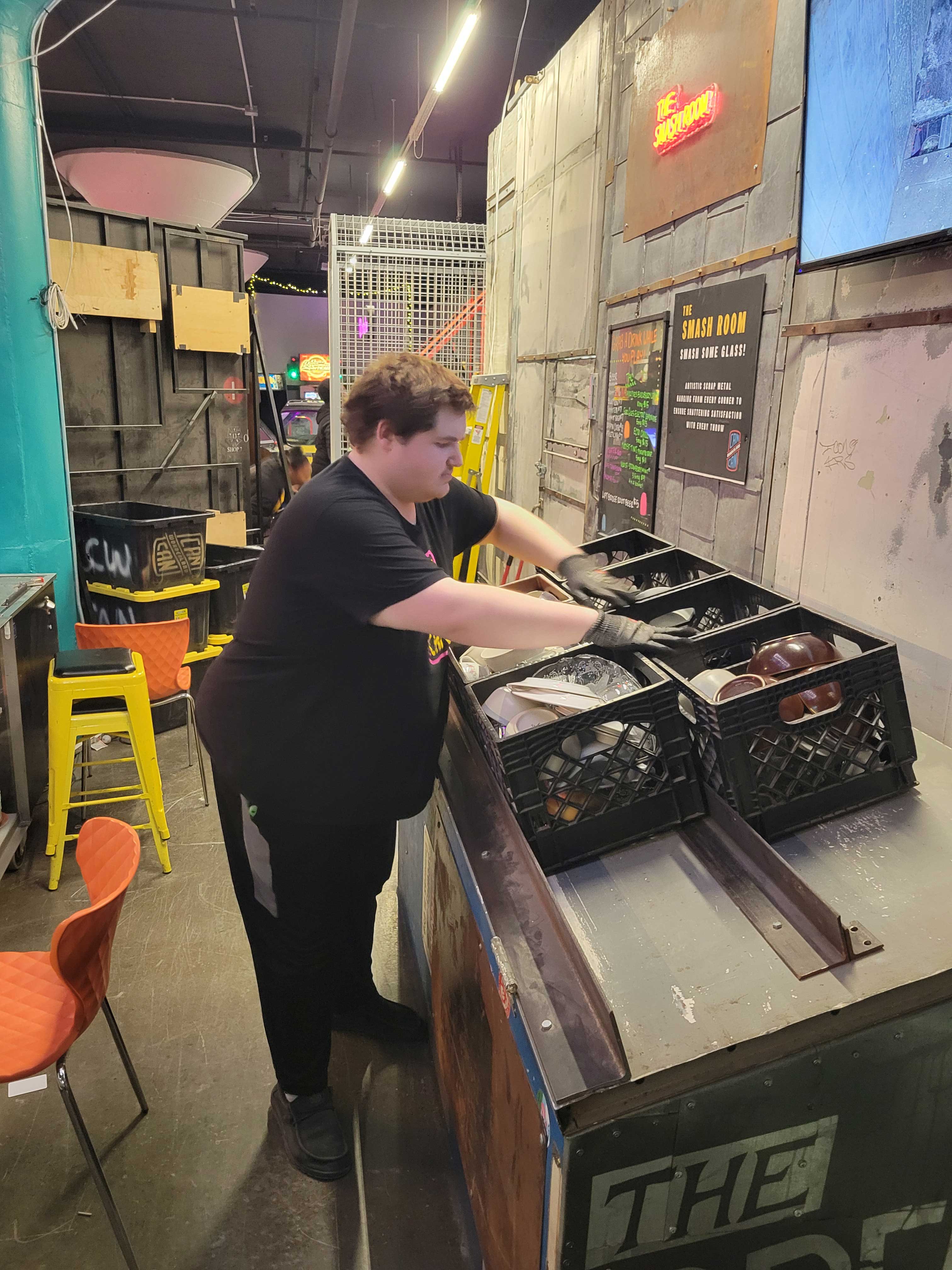
Back in October, I opened an email about a customer’s new job. Ryan H. had found a position as a smash room attendant. I’ve been in the field of employment services for quite some time and few job titles have piqued my interest quite as much as this one did. What are people smashing and how did Ryan find such a unique position?
These questions and this job are a direct result of the discovery process, a customized employment methodology at Kaposia that is strength-focused and that seeks to help people who all too often have been told to wait on the sidelines. In this case, Ryan literally got into the game. You see, he is the smash room attendant at Can Can Wonderland, a business as whimsical as its name sounds, tucked away just north of University Avenue in the Hamline-Midway neighborhood of St. Paul. Once an old factory, the site was reimagined as a retro-style arcade & mini-golf course – recently named one of the best in the country – along with foosball tables, two performance stages, a full bar and just about anything else you can imagine that can bring out the kid in us.
Ryan’s main responsibility is to unload porcelain and glass out of donated boxes – mostly unsold merchandise from Goodwill – and into milk crates. Customers then pay $20 for one of these filled crates and get to smash it all against a metal wall inside of the smash room. Ryan helps people fill out waivers, takes payments, and alerts the cleaning crew when the smash room receptacle is full. “What I like most about Ryan,” his supervisor Bentley told me, “is that he cares. His job is the smash room attendant, but he keeps an eye on the golf ball cannon and will take it upon himself to fix the foosball tables if he sees something is wrong. He even did some research on other smash rooms across the country and came to me with ideas of how to market ours better.”
This is Ryan’s very first job in the workforce and he clearly takes a sense of pride in doing it well. He often arrives for his shifts early, keeps his area clean and always makes sure the crates are well stocked. When needed, he’s also able to take a few minutes, get off his feet and sit on a stool in the booth, an accommodation that helps to make this job work for him. “I just like to keep busy,” Ryan said. “It’s something to do and I enjoy it.”
When I asked him what he would tell other young job seekers with disabilities looking for their first job, he said, “Just find something in your alley, something fun.”
– Dana J. Eisfeld, director of customized employment
Lifeworks Services Inc.
Each year, Lifeworks hosts its annual disability inclusion breakfast, a free community celebration of access, inclusion and belonging. This year’s event was especially meaningful as members of the community of practice (CoP) were invited as honored guests.
Those who attended made a powerful impact. One CoP member brought her entire team to celebrate and others engaged deeply in conversation with business leaders from across Minnesota. They shared candid insights on accessibility, stigma and the language surrounding disability — bringing lived experience directly into the dialogue.
One member even joined the event panel, helping shift perspectives and inspire change. And the ripple effects were immediate: Two attendees with disabilities secured employment directly because of connections made at the event.
Though we didn’t highlight CoP members separately, many proudly shared their involvement and the progress we’re building together.
– Keeri Tramm, director of disability initiatives
Lighthouse Center for Vital Living
Alicia is a young woman with developmental and mild physical disabilities. During COVID, she had participated in a remote cooking group that she really enjoyed, but this activity ended. Alicia missed cooking as well as the social connection, especially since she lives alone, supported by staff.
When Alicia and her mother learned about the Lighthouse’s new “Tech for Inclusion” activities, they were interested. Over a three-month period, Alicia has attended the Lighthouse’s cooking and crafting groups offered twice monthly, usually with her mother. Alicia’s mother said both she and her daughter appreciate having something fun to do together. The events have also helped Alicia participate in activities with others in the community – people with and without disabilities. Alicia said she is having fun.
The Lighthouse events have given Alicia the opportunity to try out different types of adaptive cooking tools. The Ove Gloves are one cooking tool Alicia discovered. These are high-grip, heat-resistant gloves. They help Alicia safely handle hot pans. Alicia purchased some Ove Gloves for herself and now regularly uses them while cooking with support staff in her apartment. The staff no longer need to help her remove things from the oven.
Even better, Alicia recently brought the Ove Gloves to a barbeque at her neighbor’s house. According to Alicia’s mother, Alicia was very excited to go to the event and show others how she could use the Ove Gloves to help with cooking.
Because of the Lighthouse “Tech for Inclusion” project, Alicia has increased the amount of time she spends cooking, an activity she likes, and the amount of time she spends with other people in the community. The community inclusion effect is both now and, presumably, into the future.
This story also shows that “assistive technology” need not be high-tech to be impactful. Often a simple tool, along with some training, can make a meaningful difference in a person’s ability to participate in community activities.
– Mary Junnila, executive director, and Sam Scheel, occupational therapist
MacPhail Center for Music
Adebiyi was recently spotlighted on MacPhail’s website for his ongoing involvement as a music therapy client, most recently in our Rock On ensemble. The story includes a quote from music therapist Ella Terman, the second music therapist hired as part of the grant from MDHS. The story also quotes Adebiyi’s mom, who said, “There was a time when we didn’t know where to turn. We turned to MacPhail and they helped him. Now, MacPhail is his second family.”
PHASE – Pine Habilitation and Supported Employment Inc.
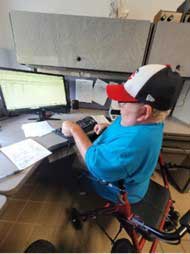
Brian Hiljus has received traditional day support services for decades. However, in early 2025, he began seriously to consider the idea of working independently in the community. Amber Kram, an employment support specialist with PHASE, provided guidance to Brian as he began exploring local businesses in his community. He found one type of business that really interested him, processing solid waste. In June, Brian requested a tour at East Central Solid Waste in Mora. During the tour, he said he was very interested in all the operations that occur there and inquired about possible job opportunities. Shortly thereafter he applied, interviewed and was hired. July 15, 2025, was his first day as the new administrative assistant.
Brian’s position requires him to be involved in many areas, but he most enjoys filing paperwork, logging fuel information on all the fleet vehicles and overseeing the process of battery recycling. He particularly excels in managing the battery recycling process. In fact, executive director John Kellas was so impressed that he assigned Brian the responsibility of providing hands-on instructional training and demonstrations to the location in Mora and also to employees at another location in Cambridge.
Brian reports that he is very satisfied with his new job.
– Curt Mangan, COO
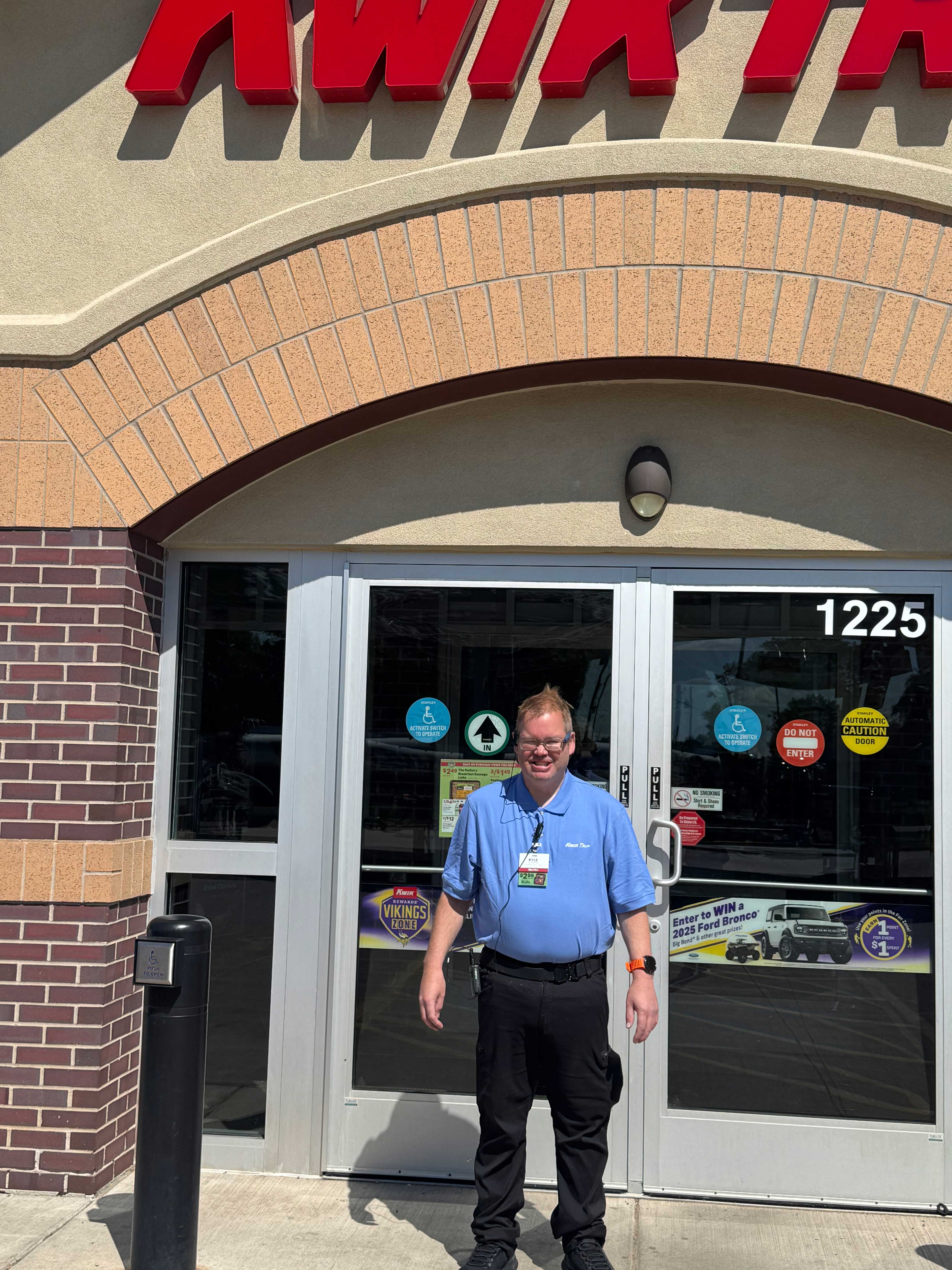
In September 2024, Kyle Hanson began to volunteer at a local retail store called Hometown Flips. His goal was to improve his existing skills and develop new skills that would help him to be more marketable as a candidate for independent employment. Kyle put in the hard work and began to excel at the tasks assigned to him while volunteering at the store. Additionally, Kyle was still working through PHASE at various enclaves in the community. After eight months of volunteering, his confidence grew and, with the help of employment support specialist April Friden, he began to seek out employment opportunities in the community. Below is how April describes Kyle’s story.
"On July 18, 2025, Kyle submitted job applications to both the Rush City and Hinckley Kwik Trip convenience store locations. He was soon contacted by both stores to schedule phone interviews and in-person interviews. After a successful phone interview with the Hinckley store, an in-person interview was scheduled. On the day of the interview Kyle decided he was going to get this job on his own and would interview without my assistance. I waited in the van for 45 long minutes until he emerged from the store smiling and exuding confidence as he shared that he felt the interview went well.
"The next day Kyle had a phone interview scheduled with the Rush City store and he waited for their phone call, but that call never came. So, Kyle decided to contact the store and asked to speak with Lori, with whom he was scheduled to have his phone interview. Lori quickly apologized and to Kyle’s surprise, asked if he had a preference between the two locations—as both were interested in hiring him based on his strong interview at the Hinckley store the day before. Kyle happily responded, “I’ll work wherever you need me." Kyle confirmed his willingness to work at the Rush City location. His official start date was Aug. 4, 2025.
"Kyle has since won over the hearts of everyone he has come across at Kwik Trip and states he will work there forever. It has been sunshine and rainbows and every time I speak with Kyle, he tells me he loves his job."
The photo is of Kyle’s first day.
– Tim Schmutzer, CEO
Pluto Noodle
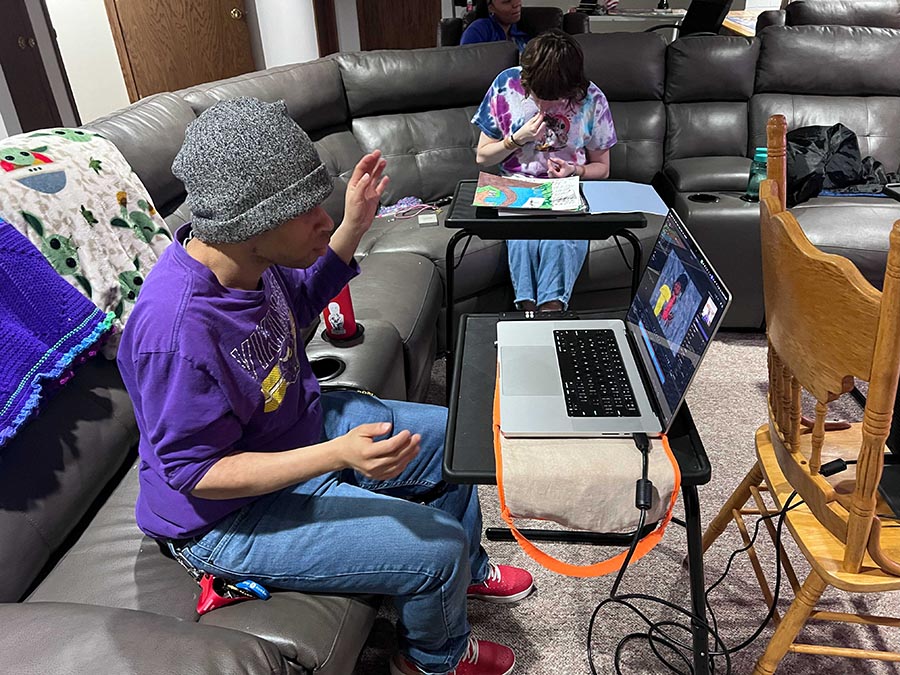
One of the most heartening aspects of the first Diverse Voices Through Animation workshop has been watching participants not only grow individually, but lift each other up along the way. Two participants in particular — Grant and Erin — developed a powerful creative rhythm over the 10-week program. While each worked on their own animated short film, they frequently offered encouragement, asked questions about each other’s stories and celebrated each other’s progress.
During voice recording sessions, when one participant was feeling unsure, the other would cheer them on or remind them how great their idea was. When storyboards were shared, they laughed at each other’s jokes, gave honest feedback and sparked new ideas by listening closely. Their support created a ripple effect that raised the energy in the room and helped everyone stay engaged and excited.
This peer encouragement helped both participants grow in confidence. Each one completed a film they’re proud of — telling stories in their own words and with their own characters. Both are already asking when they can do it again.
Caregivers and staff have noted how much participants talk about the workshop throughout the week and how proud they are to show their work to others. These moments show that the impact of the project goes beyond skill-building — it fosters real community, joy and a sense of belonging through creative expression.
– Jeremy Hosterman
Udac Inc.
Spending time with Brian, to help him discover what job opportunities he was most interested in, his career and life coach knew he was eager to find a job. It was clear that he was willing to commit to doing what it would take to find the kind of job that allowed him to grow professionally and develop skills for a more self-sufficient and independent life. A part of his path included active participation and the successful completion of employment education — MCI’s Unified Academy Career Skills course — offered through Udac. He prepared by building a resume, practicing his interviewing and self-advocacy skills to be prepared for the right opportunity. His journey was typical of many other people looking for employment.
Brian was also part of a cohort of people that met Nao as part of their program. Nao is a robot. Defined as robotics technology — socially assistive robotics — Nao is an autonomous, programmable humanoid robot. Through a DHS Innovation grant and a partnership with the University of Minnesota Robotics Institute and the Institute on Community Integration, Udac is working to use this advanced technology to help people explore a new way to learn skills and apply them to their employment and social skill development.
Nao is learner oriented and personalized to help consistently teach, prompt and encourage the person it is working with. Brian’s first interaction with Nao was an introductory session. He and another colleague asked Nao employment-related questions and Nao responded with support for what they were doing and included several suggestions for additional consideration. An example includes information on how to prepare for employment interviews and how to handle interview jitters. Nao was prepared and gave on-target suggestions and strategies, in language terms that were applicable and understandable.
Brian added a question about how to handle a conflict that he was having in his life. Nao’s response was supportive of his efforts to date, pointing out areas of strength and then provided a few ideas to use in the future. Nao offered strategies such as using “I” statements and staying calm. Brian responded, “That is what someone else said. I will try it! This robot knows a lot!”
These suggestions were well received by Brian. He acknowledged that he had heard them before from others trying to help him. He was eager to try these suggestions the next time he experienced conflict with someone.
Nao reinforced previous learning and provided this reinforcement with patience and without judgment. The affirmations given to Brian enhanced his self-esteem and boosted his confidence. Nao served as a neutral coach and provided motivation and support. Brian heard the message and was excited Nao was supporting messages he had heard before.
The second time Brian met with Nao was the day after he finished the career skills course and received his certificate of completion. He was coming from an interview for a 9-week paid internship at Essentia Health. He was offered the position and he accepted.
Brian was excited about his recent success. He asked Nao practical questions about his first day — what to expect, what to wear and how to prepare. Nao responded with personalized advice based on Brian’s profile and course history. Brian was thrilled, exclaiming, “The robot knows more than my coach!”
Nao had successfully reinforced previous education and provided reinforcement with the same patience and lack of judgment. The coaching and mentoring given to Brian once again enhanced his self-esteem and boosted his confidence. Nao served as a neutral coach and provided motivation while demonstrating enthusiasm and praise for his success.
Today, with support from his Udac career and life coach and Nao, Brian is now halfway through his internship and steadily learning to work independently. He has also begun using independent transportation to get to work and participate in community activities. The independence Brian is gaining is not only life-changing — it’s a powerful affirmation of what’s possible when people are given the opportunity to thrive.
– Karen Herman, executive director
Upstream Arts Inc.
“Trish was always engaged during the Upstream class. She would usually bring her notebook and take notes during the lecture. When we were acting out the scenario at the last class, she immediately identified how the characters "compromised" and reached an agreement. Fantastic moment when the key lesson was clarified by the participant.”
“Jamar hardly spoke during previous sessions. In the beginning of the winter session, he said he wanted to be better at speaking loud during one of our intro prompts. During the last four classes or so, he has not used the communication button. He has been using his voice to share his name and a complete sentence of where he is at according to the prompt. It is fantastic to hear him and see his confidence grow.”
– Upstream Arts teaching artist