
Alcohol, drugs and addictions
Positive Community Norms
The Positive Community Norms prevention framework works to reduce teen alcohol use.
Positive Community Norms cultivates lasting cultural transformation by involving the students, parents, teachers and the entire community in understanding not just what’s concerning, but also what’s hopeful.
Reducing youth alcohol use (PDF) Youth alcohol prevention that works: positive community norms report 2017 (PDF)
About Positive Community Norms
Positive Community Norms cultivates cultural transformation by working on multiple community levels at once. This framework has shown itself to be extremely effective in creating meaningful social change in the areas of health and safety issues including traffic safety, underage drinking, binge drinking, child maltreatment and many others.
Positive Community Norms is based on “the Science of the Positive,” the study of how positive factors impacts culture and experience. Positive Community Norms closes the gap between what we believe to be true and what is actually true. By talking about positive behaviors rather than emphasizing negative behavior and inadvertently making that seem common or even attractive, Positive Community Norms brings forward the message that the positive is the norm.
Montana Institute
The Montana Institute teaches communities how to build on their strengths and create healthy, positive environments.
Results
Positive Community Norms is making a real, positive impact in the rates of youth alcohol use.
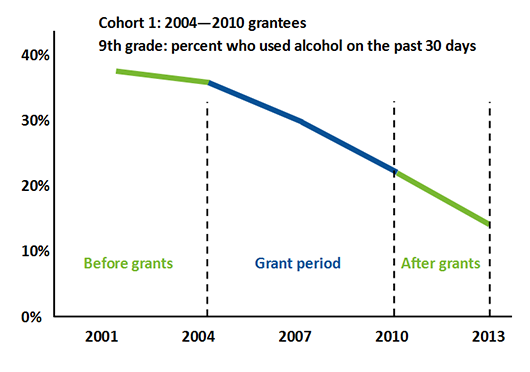
Results In the first group of schools from July 2004 to June 2010 found that average 9th grade 30-day alcohol use fell during the grant period:
- 2004: 35.5 percent used alcohol in the previous 30 days
- 2010: 22 percent used alcohol in the previous 30 days
As well as after the grants were over:
- 2013: 14 percent used alcohol in the previous 30 days
In total,
- Between 2004 to 2013, 9th grade alcohol use in the previous 30 days went from 28.6 percent above the state average to 4.8 percent below average
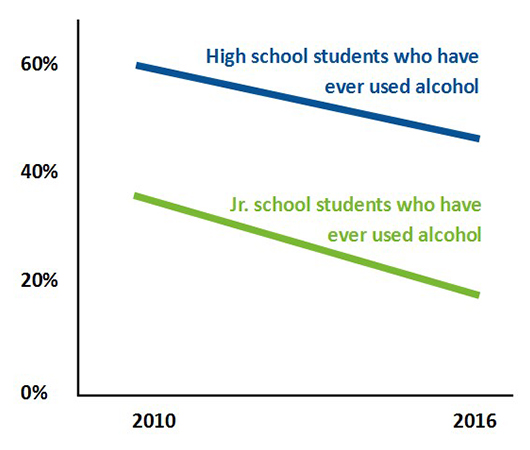
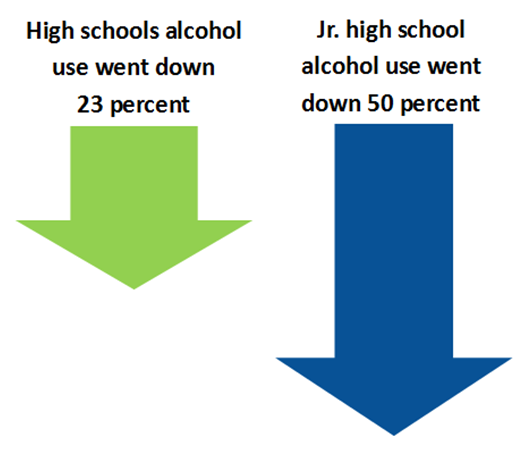
For the second group of grantees, 2010 to 2016, the percentage of both middle school and high school students who had ever used alcohol went down significantly:
- 23 percent for high school students
- 50 percent for jr. high students
In addition,
- 2010: 25.9 percent of 9th graders used alcohol in the previous 30 days
- 2016: 17.2 percent of 9th graders used alcohol in the previous 30 days
- From 2010 to 2016, the average 9th grade 30-day alcohol use rate decreased 33.4 percent.
2004 to 2010 grantees
2010 to 2016 grantees
Grants
Between July 2006 and June 2016, two sets of 5-year grants were awarded to independent school districts, local non-profits, local public health departments or to county attorney’s offices. Funds came from the Substance Abuse and Mental Health Services Administration.
In 2016, Minnesota started its third round of funding. Nine new grants funding 10 school districts have been awarded with nearly $9 Million, an average of $200,000 per year each, in grants.